What are DAS antennas?
DAS antennas are antennas used at coverage points in a distributed antenna system. They radiate and receive the RF signals delivered by the DAS across buildings, venues, tunnels, campuses, and other defined coverage areas.

SISO and MIMO,PIM:-150dBc@20w


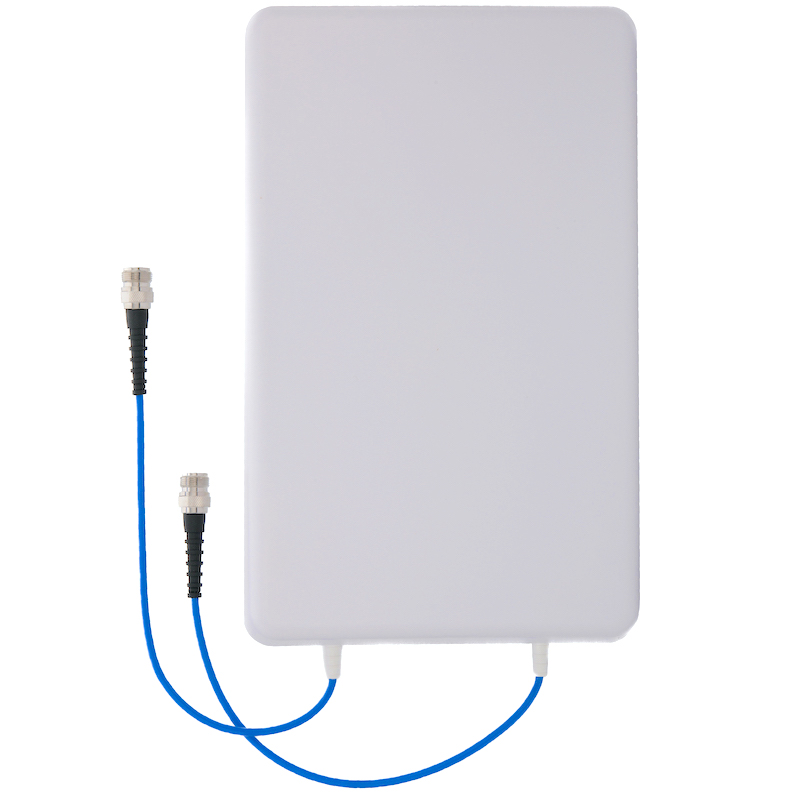


DAS antennas are antennas used at coverage points in a distributed antenna system. They radiate and receive the RF signals delivered by the DAS across buildings, venues, tunnels, campuses, and other defined coverage areas.
RFCOM supplies omni-directional and directional panel antennas for indoor coverage and DAS projects, including SISO, 2x2 MIMO, and 4x4 MIMO configurations. Frequency range, gain, pattern, connector arrangement, PIM value, and mounting vary by model.
In a multi-band DAS, passive intermodulation generated at an antenna or connection can fall into an uplink band and affect receive performance. A low-PIM antenna helps reduce that risk, but the installed result also depends on jumpers, connectors, torque, cleanliness, corrosion, mounting stress, nearby metalwork, power levels, and the test method.
An omni antenna distributes energy broadly around the antenna and is often used for general rooms or open areas. A directional panel antenna concentrates coverage toward a defined direction and may fit corridors, long spaces, sectorized areas, high-rise facades, or targeted zones. The choice should follow the coverage geometry and RF plan rather than the room name alone.
Use a MIMO antenna only when the radio source and DAS provide the corresponding independent RF paths. The design must also account for cabling or active distribution, port isolation, polarization or spatial arrangement, path balance, and commissioning. Installing a 2x2 or 4x4 antenna by itself does not create additional MIMO layers or network capacity.
RFCOM's website includes DAS antenna models covering ranges such as 698-2700 MHz and 698-4200 MHz. These are model examples, not a universal specification. Confirm the required operator bands, gain, radiation pattern, connector type, MIMO configuration, PIM test condition, and installation environment against the selected datasheet.
Provide the required bands, radio and MIMO configuration, room or coverage geometry, ceiling or mounting height, antenna spacing, target signal level, gain and pattern preference, connector and cable arrangement, PIM requirement, indoor or outdoor environment, mounting method, and any aesthetic or fire-safety constraints.
RFCOM can review custom frequency ranges, MIMO configurations, radiation patterns, gain targets, connector layouts, PIM requirements, radomes, labels, colors, and mounting arrangements. Final specifications and test conditions are confirmed before quotation.